Burning Cables: Why It Is Illegal and What Fine You Face
Burning Cables: Why It Is Illegal and What Fine You Face
Burning cables is prohibited in Slovakia, whether in your yard, your garden or your stove. A private individual who burns cables faces a fine of up to €1,500 under the Waste Act, and a company or sole trader faces a fine of €4,000 to €350,000. Burning the insulation also releases toxic substances that stay in the soil and end up in food.
Why People Burn Cables
After renovating an apartment or a house, you are left with a pile of old cables. Anyone who knows that bare copper fetches a better price at a scrap buyer than insulated cable gets an idea: burn off the insulation and sell the clean metal.
The insulation is plastic, mostly PVC. It has no scrap value, which is why a kilogram of cable is worth less than a kilogram of copper. Burning looks like a quick shortcut. In reality, it violates several laws at once and almost never pays off financially.
What Burning Cables Produces
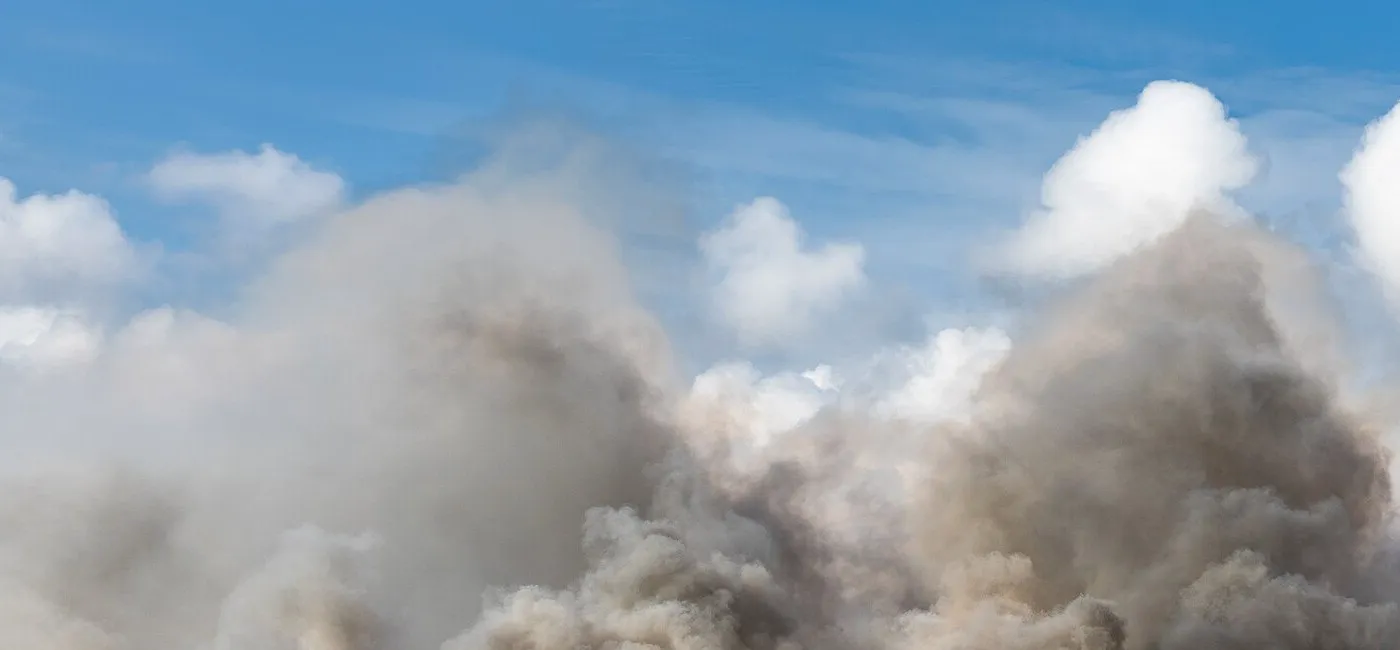
Burning PVC produces hydrogen chloride, a gas that irritates the eyes and airways. Stabilizers in older insulation contain lead and cadmium, which remain in the ash and the soil after burning.
The biggest problem is dioxins and furans. These substances form when plastics containing chlorine burn incompletely. The US Environmental Protection Agency (EPA) points out that copper further promotes their formation, which makes burning copper cables a significant source of dioxins. According to the World Health Organization, dioxins accumulate in the food chain and remain in the body for years. The most toxic of them is recognized as a carcinogen.
In other words, you are not the only one breathing the smoke from burning cables. Your neighbors are too. And the residue ends up in your garden, where you may be growing vegetables.
Burning Cables and Fines: What the Law Says
Burning cables is prohibited by several regulations at once. An overview for private individuals:
| Regulation | What it prohibits | Who handles it | Penalty |
|---|---|---|---|
| Act No. 79/2015 Coll. on Waste | burning municipal waste in the open and in household stoves (Section 13(h)), handling waste in violation of the act (Section 13(b)) | municipality (obec) | fine of up to €1,500 (Section 115) |
| Act No. 146/2023 Coll. on Air Protection | burning anything other than dry, chemically uncontaminated plant material on an open fire or in the open (Section 32(d)) | municipality or Slovak Environmental Inspectorate (Slovenská inšpekcia životného prostredia) | fine under Section 54 |
| Act No. 314/2001 Coll. on Fire Protection | starting a fire where it can spread (Section 14(2)(c)) | district directorate of the Fire and Rescue Service (okresné riaditeľstvo Hasičského a záchranného zboru) | reprimand or fine of up to €331 (Section 61) |
The Waste Act
Under the law, old cables from a household are waste. Waste from a private individual is classified as municipal waste (Section 16(2) of the Waste Act). Section 13(h) prohibits burning municipal waste in the open and in household heating appliances.
If a private individual does this, it is an administrative offense. The municipality handles it, and the fine can be up to €1,500. A company or sole trader that burns cables from a job will be fined €4,000 to €350,000 by the district office (okresný úrad) or the inspectorate (Section 117(6)). For a repeat violation within one year, the fine can be up to double.
The Air Protection Act
The Air Protection Act applies directly, regardless of what a municipal ordinance (všeobecne záväzné nariadenie) says. On an open fire, you may burn only dry plant material that is not contaminated with chemicals. Cables are not among them. A violation is an administrative offense handled by the municipality or the inspectorate.
The Fire Protection Act
If you burn in a place where the fire can spread, for example near a fence, a shed or dry grass, the firefighters may step in too. You face a reprimand or a fine of up to €331.
When It Can Be a Criminal Offense
Section 302 of the Criminal Code punishes unauthorized handling of waste even on a small scale, meaning a scale above €700. If someone burned cables on a large scale or repeatedly, for example from a demolition job, it could be a criminal offense punishable by up to two years in prison. For ordinary leftovers from an apartment, a fine for an administrative offense is the more realistic outcome.
Do you have old cables at home and don't know what to do with them? The WIP cable buying point (káblovňa) in Bratislava buys cables with insulation too, so you don't need to process them in any way. Ask us at +421 911 829 999.
Is It Even Worth It? An Illustrative Calculation
Imagine that after replacing your wiring, you have 10 kg of scrap CYKY 3×2.5 copper cable left over. This type of cable contains roughly 47% copper. Prices are from the WIP price list, retrieved on November 20, 2026.
Insulated cable (Cu cables 40% group):     10 kg × €3.00         = €30.00
Burned copper (Cu MIX):                    4.7 kg × €9.00        = €42.30
Mechanically stripped copper (Millberry):  4.7 kg × €10.00       = €47.00

Difference, burning vs. selling insulated: €42.30 − €30.00       = €12.30
Risk for an offense under the Waste Act:                         up to €1,500
The figures are illustrative. Burned copper also tends to be brittle, and some of the metal turns into oxides during burning, so you actually end up with less. Burning may earn you a few euros, but you risk a fine that far exceeds the gain. If you want more for your copper, the legal way is mechanical stripping. We discuss when it pays off in the article Stripping Cables: When It Pays Off and When It Doesn't.
Why burned copper is cheaper than shiny wire is explained in the article Cu Mix, Tinned and Burned Copper: Differences in Scrap Buying.
What to Do With Old Cables Instead of Burning Them
- Leave the cables as they are. Scrap buyers also buy insulated cables. The price depends on the type of metal and its share in the cable.
- Separate copper from aluminum. If you are not sure, the article How to Tell Whether a Cable Contains Copper or Aluminum will help.
- Remove other waste. Plaster, drywall and plastic junction boxes do not belong in the bag with the cables.
- Check the price list. Current prices are in the price list.
- Bring your ID and bank account number. The buyer must record you in their register and may pay for scrap metal only by bank transfer or postal money order.
If an electrician replaced your wiring, the old cables are usually their waste, and they are the one who takes them to the scrap buyer. Learn more in the article Replacing Aluminum Wiring in a Panel Building: What to Do With the Old Cables.
Want to know how much you'll get for insulated cables? Compare the price groups by metal content in the current price list.
Common Mistakes
- "I'll just burn it a little in a barrel, nobody will notice." Neighbors are the first to spot the black smoke and the smell of plastic, and they can report it to the municipality.
- Burning in a stove or fireplace. The Waste Act explicitly prohibits burning municipal waste in household heating appliances as well.
- Throwing cables into mixed waste. It isn't burning, but the metal is lost, and cables do not belong in the black bin.
- Assuming burned copper is "clean." The buyer will classify it as burned copper, not as shiny wire.
Frequently Asked Questions
What is the fine for burning cables?
The municipality can fine a private individual up to €1,500 under the Waste Act for burning cables as municipal waste. A company or sole trader faces €4,000 to €350,000. If the fire could have spread, the firefighters can add a fine as well.
Can I burn cables on my own property?
No. The ban applies in your own yard or garden too. On an open fire, you may burn only dry plant material that is not chemically contaminated.
Who can I report cable burning to?
Burning waste is handled by the municipality or the Slovak Environmental Inspectorate. If there is a risk of fire, call the fire department at 150 or 112.
Will you buy cables with the insulation on?
Yes. Cables are bought based on their metal content, and you don't need to remove the insulation. The buyer determines which price group they belong to during inspection.
Conclusion
Burning cables is prohibited by both the Waste Act and the Air Protection Act, it harms your health and your neighbors' health, and a private individual faces a fine of up to €1,500 for it. The profit from burned copper is negligible by comparison. So take your old cables to a scrap buyer as they are, sorted into copper and aluminum. What to do with other leftovers from a renovation is covered in the article Leftover Cables After a Renovation: What to Do With Them.
Do you have old cables left over from a renovation? Call the WIP cable buying point in Bratislava at +421 911 829 999 or email kablovna@wip-autovrakovisko.sk. The cable buying point is at Galvaniho 12 in Bratislava and is open Monday to Friday from 7:00 a.m. to 3:30 p.m.
Contact the cable buying point →
Sources
- Act No. 79/2015 Coll. on Waste, as amended effective January 1, 2026 (Sections 13, 16(2), 115, 117), Slov-Lex.
- Act No. 146/2023 Coll. on Air Protection (Sections 32, 54), Slov-Lex.
- Act No. 314/2001 Coll. on Fire Protection (Sections 14, 61), Slov-Lex.
- Act No. 300/2005 Coll., the Criminal Code (Sections 125, 302), Slov-Lex.
- Lemieux et al.: Emissions of organic air toxics from open burning, EPA, 2004.
- World Health Organization: Dioxins and their effects on human health.
- European Commission: Green Paper on Environmental Issues of PVC, COM(2000) 469.
- WIP Autovrakovisko price list, retrieved November 20, 2026.
Cover photo (cropped): Muntaka Chasant, Wikimedia Commons, licence CC BY-SA 4.0.