Is It Worth Collecting Cables from Your Jobs? A Calculation for Small Firms
Is It Worth Collecting Cables from Your Jobs? A Calculation for Small Firms
Is cable buyback worth it for a small firm? Yes, if you collect cables continuously, sort them right on site and take them to the buyer in larger batches or on a trip you are making anyway. In the illustrative calculation below, 200 kg of sorted cables brings in more than €400 after deducting time and transport, while a separate trip with 15 kg of leftovers barely pays off.
What makes up the income and the costs
To decide whether collecting cables is worth it, you only need to compare two sides.
Income:
- the weight of the cables,
- the price group the buyer assigns them to (based on the type of metal and its share in the cable),
- the waste bill you do not pay, because the cables do not end up in a skip with rubble.
Costs:
- time for sorting and setting cables aside on site,
- time for the trip to the buyer and weighing,
- fuel and wear on the van,
- space in the van or storage while the cables wait.
The price group and the number of trips matter most. Sorting time is small if you drop cables into bags as you go.
Current prices used in the calculation
The calculations are based on the WIP price list we loaded on 7 Nov 2026. The price list states neither a validity date nor VAT, and prices change with metal prices. Always check the current price list before you drive.
| Group | What belongs in it (approximate) | Price per kg |
|---|---|---|
| Cu cables 20% | thin cords, low-voltage cables | €1.00 |
| Cu cables 30% | thinner installation cables | €2.00 |
| Cu cables 40% | standard installation cables from flats | €3.00 |
| Cu cables 50% | thicker supply and power cables | €3.50 |
| Cu cables 60% | thick power cables | €4.00 |
| Al cables 60% | aluminium cables | €0.80 |
| New Cu wire – Millberry | clean bright copper without insulation | €10.00 |
The assignment of cable types to groups is approximate. The buyer decides the group on inspection. The full breakdown of groups and what they depend on is in the article Cable buyback in Bratislava: how much you get per kilogram.
Calculation: is cable buyback worth it with 200 kg?
An illustrative example. A crew renovates flats in Bratislava and collects 200 kg of cables over a quarter. They go to the buyer once, in their own van.
Assumptions to replace with your own numbers:
- value of your hour: €20,
- round trip: 30 km,
- van costs including fuel and wear: €0.35 per km,
- trip, unloading and weighing: 1.5 hours,
- sorting over the whole quarter: 2 hours in total.
Composition and income:
| Cable type | Weight | Group | Price | Total |
|---|---|---|---|---|
| standard installation cables | 100 kg | Cu 40% | €3.00 | €300 |
| thicker supply cables | 40 kg | Cu 50% | €3.50 | €140 |
| thin cords and low-voltage | 40 kg | Cu 20% | €1.00 | €40 |
| old aluminium wiring | 20 kg | Al 60% | €0.80 | €16 |
| Total | 200 kg | €496 |
income:              300 + 140 + 40 + 16      = €496.00
sorting:             2 h × €20                = €40.00
trip time:           1.5 h × €20              = €30.00
van:                 30 km × €0.35            = €10.50
total costs:         40 + 30 + 10.50          = €80.50
net income:          496 − 80.50              = €415.50
If you did not sort the same 200 kg, the buyer could rate the mix with aluminium and thin cables lower. If the whole mix went into the Cu 20% group, it would look like this:
income:              200 kg × €1.00           = €200.00
costs without sorting: 30 + 10.50             = €40.50
net income:          200 − 40.50              = €159.50
Which group the mix would really go into depends on its composition. The difference of about €250, however, shows that two hours of sorting are the best-paid work of the whole exercise in this example. How to sort right on site is described in our article on sorting cables on a construction site.
Want to run the calculation with today's prices? Plug your kilograms into the current price groups.
When cable buyback does not pay off
Most often, a separate trip with a small amount does not pay off. Example: after one flat you have 15 kg of standard installation cables left and you take them on a separate trip.
income:              15 kg × €3.00            = €45.00
trip time:           1.5 h × €20              = €30.00
van:                 30 km × €0.35            = €10.50
net income:          45 − 30 − 10.50          = €4.50
This gives a simple rule for how many kilograms make a separate trip start to pay:
threshold (kg) = trip costs / price per kg
€40.50 / €3.00 ≈ 14 kg of standard installation cables
€40.50 / €1.00 ≈ 41 kg of thin cables
€40.50 / €0.80 ≈ 51 kg of aluminium cables
At the threshold you are working for free. It makes sense to go only at several times this amount, or to combine the buyback with a trip you are making anyway, for example to the building supplies store.
Stripping thin cables does not pay off either. They contain little copper and the work takes a long time. We will look at when stripping is worth it in a separate article.
How to collect cables so that it pays off
- Keep 3 to 4 labelled bags on every job: "Cu thick", "Cu thin", "aluminium", "bare copper". Sorting as you set cables aside takes minutes; sorting a pile at the end takes hours.
- Remove whatever is not cable straight away. Boxes, terminal blocks, plaster and render add weight, not metal.
- Store them dry and in one place. In a yard or storeroom, not in the van, where they take up space meant for tools.
- Weigh the cables now and then. Even bathroom scales are enough to estimate whether you have enough for a trip.
- Go to the buyer with a larger amount or on a trip you are making anyway.
- Arrange a pickup for large volumes. According to the WIP website, you can order a skip or a free cable pickup. Check by phone from what amount this applies. How it works is described in the article Cable skip for a construction site.
Collected more than fits in the van? For larger volumes, a pickup or a skip can be arranged.
Who owns the cables from a job
Before you start collecting, make sure the cables are yours. When renovating for a private individual, the producer of waste from construction work under Section 77(2) of Act No. 79/2015 Coll. on Waste (zákon č. 79/2015 Z. z. o odpadoch) is the one who carries out the work, which is usually your firm. If you work for a company or an investor with a building permit, the law makes them the producer. In that case, agree with them in advance who will hand over the cables and who gets the proceeds. Details are in the article Cables from construction and the Waste Act.
The simplest way is to put it in your quote: one sentence saying that the contractor removes and recovers dismantled material saves arguments later.
Common mistakes
- Driving with a few kilos. A separate trip with a small amount eats up all the income.
- Everything in one bag. A mix with aluminium and thin cables is usually rated lower.
- Cables in the rubble skip. You pay to have them removed as waste instead of getting paid for them.
- Burning the insulation. It is illegal, harms health, and burnt copper is not bought as the most expensive category.
- Prices from memory. Prices change; always do the calculation with the current price list.
Frequently asked questions
From how many kilograms is it worth going to the buyer?
It depends on the distance and the type of cables. In our illustrative example with trip costs of €40.50, the threshold is about 14 kg for standard installation cables and about 41 kg for thin ones. It makes sense to go at several times this amount.
Is cable buyback worth it if I don't sort them?
Usually yes, but you earn less. The buyer will take a mix too, but usually puts it in a lower group. Sorting right on site is the cheapest way to increase the income.
Do you pay for cable pickup?
According to the WIP website, you can order a skip or a free cable pickup. Check the conditions, such as a minimum amount, by phone.
Can I sell cables from a customer's job?
When renovating for a private individual, the producer of the waste is usually your firm. On a job for a company or an investor with a building permit, the investor is the producer. In that case, agree the handover and the proceeds with them.
Is it worth stripping cables?
With thick cables it can be, with thin ones almost never. According to the WIP price list, clean copper costs €10.00 per kg, but thin cables contain little of it and the work takes long.
Conclusion
Collecting cables from jobs pays off for a small firm if it sticks to three things: it sorts continuously on site, stores cables in one place and goes to the buyer with a larger amount or on a trip it is making anyway. In our illustrative calculation, 200 kg of sorted cables leaves about €415 after deducting time and transport, while a separate trip with 15 kg brings in a few euros. Plug in your own numbers and current prices. More about what happens to cables after handover is on the cable processing page.
Collected some cables and about to drive them over? Prices change with metal prices, so it pays to check before every trip.
Check prices before you drive →
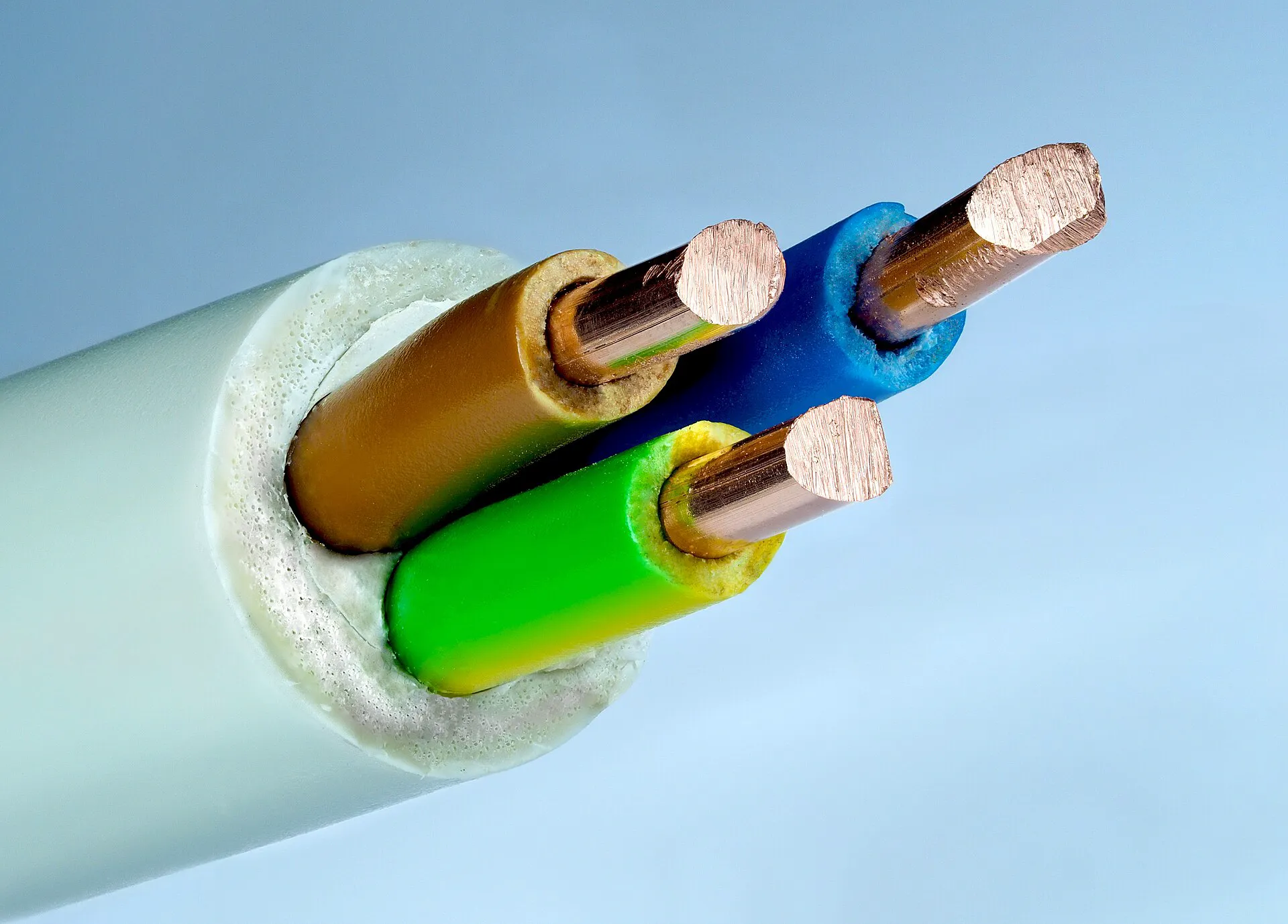
Cover photo: Olaf, Wikimedia Commons, licence CC BY 3.0.