Leftover Cables After a Renovation: What to Do With Them
Leftover Cables After a Renovation: What to Do With Them
Leftover cables after a renovation do not belong in the rubble skip or in a fire. The best option is to keep them apart from other waste, sort them by metal and take them to a cable buyer, where you get paid and also receive proof that you disposed of the waste legally. If you renovate for a private customer, the decision is usually yours, because your company is the waste producer (pôvodca odpadu).
Where to take leftover cables: options compared
After tearing out old wiring and installing new circuits, you are left with two kinds of leftovers: old cables from the walls and offcuts of new cables. There are several options, and they are not equally good.
| Option | What you get | What to watch out for |
|---|---|---|
| Cable buyback | money based on the metal, proof of handover | you have to transport them, sorting raises the price |
| Rubble skip | nothing, you pay for removal of the full weight | cables have their own waste catalogue number, a mix is lower-grade waste |
| Municipal collection yard (zberný dvor) | free of charge | it serves residents, a company usually cannot hand in its own waste there |
| Leave them with the customer | nothing | construction waste is usually yours, not theirs |
| Burning | nothing, only risk | burning waste outside approved facilities is prohibited |
For cables, the buyback is the only option that gives you something back. The others cost you money or expose you to the risk of a fine.
Why not into the rubble skip
Cables have their own waste catalogue number, 17 04 11. When they end up in rubble, they add to the weight of the skip you pay for, and the metal in them is lost. How to classify cables from a construction site correctly is explained in the article Waste catalogue number for cables 17 04 11.
Why not to the collection yard
Municipal collection yards are meant for waste from the municipality's residents, including small construction waste from households. The municipality will usually not accept waste from your business activity. Each municipality sets its conditions in its generally binding regulation (všeobecne záväzné nariadenie, VZN). If you are not sure, check with the municipal office.
Why never burn them
Burning insulation produces toxic fumes, and burning waste outside facilities designed for it is prohibited. Besides the risk of a fine, you also lose money: burnt copper is bought at a lower price than new bright copper.
Do you have bags of old cables left after a job? Before you drive off, check which group they belong to.
Who owns leftover cables from a job
This is a common question when the customer sees you leaving with the cables.
Under Section 77(2) of Act No. 79/2015 Coll. on Waste, the producer of waste from construction and demolition work is the person carrying out the work, if it is done for a natural person. When you renovate a flat or house for a private customer, that is usually your company. You are responsible for how the waste is handled, and the buyback proceeds are yours.
It is different when you work for a company, a property manager or an investor holding a building permit. In that case, they are the waste producer. Agree in advance who will hand in the cables and who gets the proceeds, ideally in writing in the contract or order. We cover the obligations in more detail in the article Cables from construction sites and the Waste Act.
With private customers, one sentence in the quote helps: "We will remove and dispose of the waste, including old cables, ourselves." This avoids misunderstandings.
How much you get for leftover cables
The buyer pays for the metal in the cable, not for the insulation. The price therefore depends on whether the core is copper or aluminium and what share of the cable's weight the metal makes up. These are the groups that renovation leftovers usually fall into. The prices come from the WIP price list we loaded on 7 November 2026 and change with metal prices.
| What you have left (indicative) | Price list group | Price per kg |
|---|---|---|
| thin cords, telephone and data cables | Cu cables 10 % to 20 % | €0.50 to €1.00 |
| old and new installation cables with a copper core | Cu cables 30 % to 40 % | €2.00 to €3.00 |
| thicker supply and power cables | Cu cables 50 % to 60 % | €3.50 to €4.00 |
| old aluminium wiring | Al cables 40 % / 60 % | €0.50 / €0.80 |
| stripped clean aluminium | Al conductor clean, bright | €2.00 |
| new bright bare copper | Cu wire new – Millberry | €10.00 |
| brass terminals and parts | Brass new | €4.20 |
The buyer decides which group a particular cable belongs to during inspection. The classification in the table is only indicative. How cable prices are set is explained in the article Cable buyback Bratislava: how much you get per kilogram.
Worked example (illustrative)
After a complete renovation of an older flat, you are left with 40 kg of cables:
- 20 kg of old aluminium wiring (group Al 40 %),
- 15 kg of copper installation cables (group Cu 40 %),
- 5 kg of offcuts of new copper cables (group Cu 40 %).
Sorted: 20 × 0.50 + 15 × 3.00 + 5 × 3.00 = €70
From one flat, that is not much money. But if you collect leftovers from all your jobs, 10 such flats a year come to around €700, plus the space saved in the rubble skip. Whether collecting pays off once you count the time for sorting and driving is shown in the article Is it worth collecting cables from jobs? Prices are based on the WIP price list of 7 November 2026; the calculation is illustrative.
What to do with leftover cables: step by step
- Separate cables from rubble right when you strip out. Keep a separate bag or crate on site for cables only. Do not throw pulled-out cables onto the rubble pile.
- Collect offcuts of new cables separately. New wiring produces many short offcuts. They are clean and of consistent quality, so do not mix them with old cables from the walls.
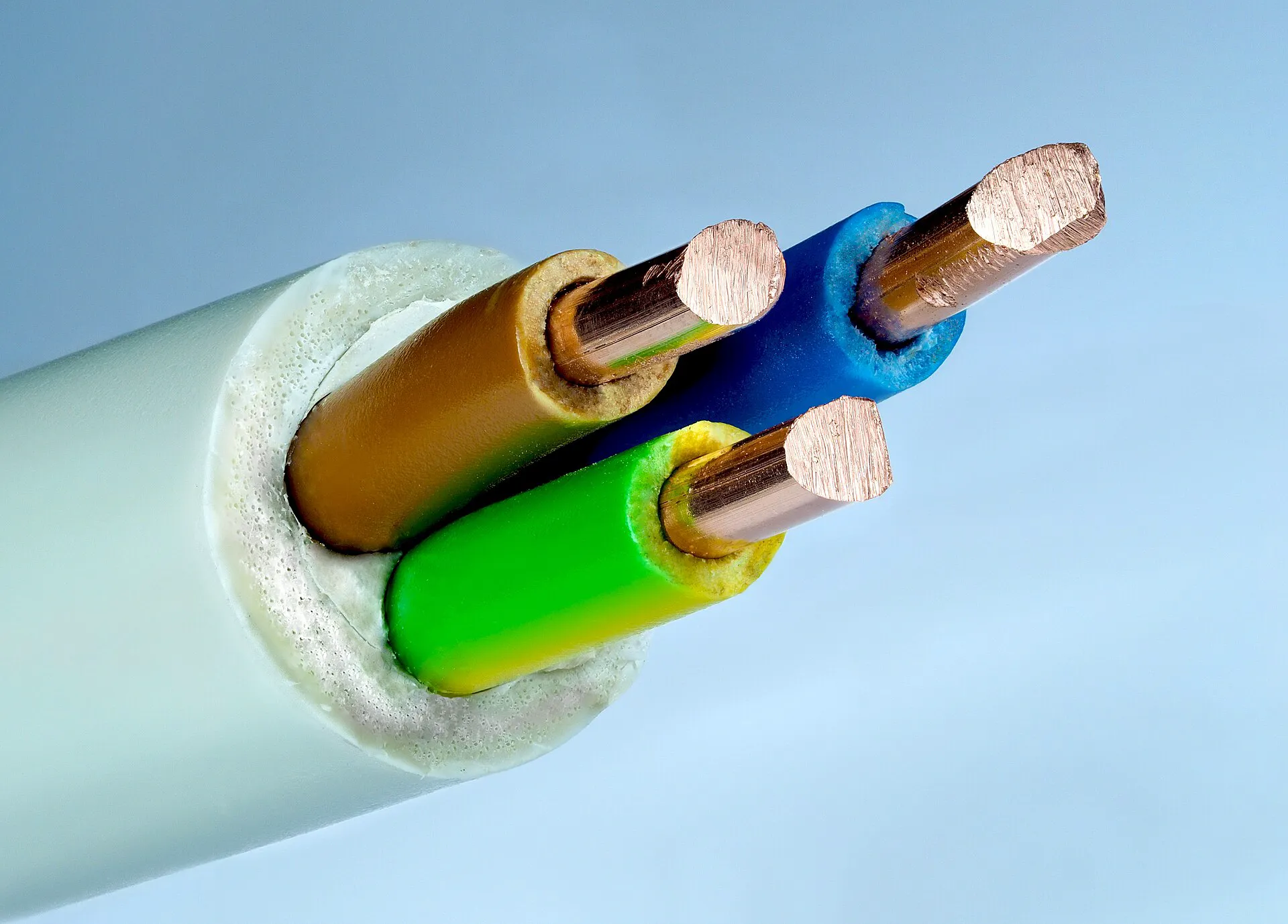
- Separate aluminium from copper. Aluminium wiring is common in older flats and houses. Cut off the end of the cable and look at the core: copper is reddish, aluminium silvery grey.
- Remove anything that is not cable. Take off boxes, terminal blocks, plaster, render and tape. Put brass terminals aside separately.
- Store them dry and under a roof. Wet and muddy cables weigh more, and the buyer will take that into account.
- Collect a sensible quantity. Driving a few kilograms from one job on their own does not pay off. Collect from several jobs in a garage or storeroom and take them in one go.
- Check the price list and documents before you go. Prices change, and for larger quantities a pickup or a container can be arranged. Check by phone which documents you need for the handover.
How to sort cables in more detail to get a higher price is covered in a separate article on sorting cables on site.
Have you collected more than fits in your van? For larger volumes, a pickup or a container can be arranged.
Common mistakes with leftover cables
- Cables in the rubble. You pay for their weight in the skip and get nothing for them.
- Leaving them with the customer "for later". When you work for a private person, the waste is usually yours. Leaving it on site only postpones the problem.
- Aluminium mixed with copper. Aluminium fetches several times less and lowers the price of the whole batch.
- Burning the insulation. It is prohibited, and burnt copper fetches less than bright copper.
- Driving a few kilos at a time. The trip costs you more than you get for them.
Frequently asked questions
Can I throw leftover cables into ordinary waste?
No. Cables from construction work are not municipal waste. They fall under catalogue number 17 04 11 and must be handled as construction waste, ideally handed in for recycling.
Do old cables belong to me or to the customer?
If you renovate for a private person, the producer of construction waste under the Waste Act is usually your company. When you work for a company or an investor with a building permit, they are the producer, and it is good to agree in advance.
Will they buy a small quantity of cables?
The WIP price list does not state a minimum quantity. With just a few kilograms, however, the proceeds are small, so it pays to collect leftovers from several jobs and bring them in at once.
Is it worth stripping leftover cables?
For thick cables it can be; for thin cords and short offcuts almost never. Working with a knife takes a long time and there is little copper in them. We cover stripping in a separate article.
Will they take cables with bits of plaster on them?
Yes, but plaster and render add weight without metal, and the buyer will take that into account. Remove coarse dirt before you go.
Conclusion
Do not throw leftover cables from a renovation into the rubble or burn them. Separate them on site, copper apart from aluminium and offcuts of new cables apart from old ones, collect them from several jobs and take them to a cable buyer. When you work for a private person, the waste is usually yours, so both the proceeds and the responsibility are yours. Check the current price list before every trip, as prices change with metal prices.
Getting ready to take your leftovers to the buyer? See how much you get for them today.