Sorting cables on a construction site: how to separate them for a higher buyback price
Sorting cables on a construction site: how to separate them for a higher buyback price
Sorting cables on a construction site means dividing them by type of metal (copper, aluminium) and by thickness, in other words by how much metal they contain. A buyer pays for the metal, not the insulation, so a mixed pile usually goes at the price of its weaker part. If you separate copper from aluminium and thick cables from thin ones, the same material can be worth considerably more.
Why sorting cables pays off
At a buyback, a cable is valued by the share of its weight that is metal. A thin cord has a lot of plastic and little copper. A thick power cable has a lot of copper. When they are mixed in one bag, the buyer cannot weigh and value each piece separately. The whole batch is then usually graded more cautiously, which means lower.
The second reason is aluminium. At a buyback, aluminium is several times cheaper than copper. If an aluminium cable gets mixed in with copper cables, it lowers the price of the whole batch.
Price groups: what to sort by
These are the price groups in the WIP price list as we loaded it on 6 November 2026. Prices change with metal prices, so always check the current price list before you bring your cables.
| Group | What belongs in it (approximate) | Price per kg |
|---|---|---|
| Cu cables 10 % | thin communication cables, cords | €0.50 |
| Cu cables 20 % | thin multi-core cables with thick insulation | €1.00 |
| Cu cables 30 % | thinner installation cables | €2.00 |
| Cu cables 40 % | standard installation cables | €3.00 |
| Cu cables 50 % | thicker installation and power cables | €3.50 |
| Cu cables 60 % | thick power cables with a large cross-section | €4.00 |
| Al cables 40 % / 60 % | aluminium cables by metal content | €0.50 / €0.80 |
| XPE cables | aluminium cables with copper shielding | €0.80 |
| Car cables | clean wiring from cars | €3.50 |
| New Cu wire – Millberry | new, clean, bright copper | €10.00 |
| Cu mix | oxidised and tinned copper, pieces | €9.60 |
| Clean, bright Al conductor | stripped aluminium | €2.00 |
| New brass | e.g. brass terminals and parts | €4.20 |
The percentages are the share of metal in the cable's weight. The buyer decides which group a particular cable belongs to during inspection. The assignment in the table is approximate.
Not sure which group your cables belong to? We will advise you based on the cable type and cross-section.
How to sort cables right on site: step by step
The least work is to sort as you go, not from one big pile at the end of the job.
- Set up 3 to 4 bags or crates on site and label them with a marker: "Cu thick", "Cu thin", "aluminium", "other". Big bags or old adhesive sacks will do.
- Separate aluminium from copper. Aluminium is common in old flat wiring. Cut off the end of the cable and look at the core. Copper is reddish to brown, aluminium silver-grey. Aluminium is also noticeably lighter, with about a third of the density of copper.
- Divide copper cables by thickness. Put thick power cables and feeders in one place, standard installation cables in another, and thin cords, telephone and data cables in a third. The less metal a cable has, the lower its group.
- Keep bare copper completely separate. New offcuts of bright copper and clean conductors belong in the highest price groups. Do not mix them with insulated cables.
- Remove anything that is not cable. Terminal blocks, junction boxes, lumps of plaster, render, tape or steel clips add weight but no metal. Brass terminals can be sold separately.
- Keep car cables and aluminium-core cables with copper shielding (XPE) apart, as they have their own groups in the price list.
- Keep the material dry and clean. Mud and rubble add weight, and the buyer will take them into account.
Worked example (illustrative)
After renovating a flat you are left with 200 kg of cables:
- 120 kg of standard installation cables (40 % group),
- 50 kg of thin cords and low-voltage cables (20 % group),
- 30 kg of thicker feeders (50 % group).
Sorted:  120 × 3.00 + 50 × 1.00 + 30 × 3.50 = €515
Mix in the 30 % group:  200 × 2.00 = €400
Mix in the 20 % group:  200 × 1.00 = €200
Which group a buyer would put a mix into depends on its composition and the inspection. Still, a difference of tens to hundreds of euros shows that half an hour of sorting on site can pay off more than an extra trip. Prices are taken from the WIP price list of 6 November 2026; the calculation is illustrative.
What to check before you deliver
If you are renovating for a private individual, the waste producer for construction work under § 77(2) of Slovak Act No. 79/2015 Coll. on Waste (zákon o odpadoch) is the person carrying out the work, which is usually your company. If you work for a company or an investor holding a building permit, the law makes them the waste producer. In that case, agree with them who delivers the cables and who keeps the proceeds. You can read more about obligations for construction waste in the article Cables from construction sites and the Waste Act.
Before you set off, check by phone which documents you need at handover. For larger quantities, collection or a container can also be arranged.
Left with more cables after a job than fit in your van? For larger quantities, collection or a container can be arranged.
Common sorting mistakes
- Aluminium in the copper. A single aluminium cable in a copper batch lowers the price of the whole batch.
- Sorting only at the end. Sorting a pile of tangled cables takes ages. Sorting into bags as you go takes minutes.
- Bare copper among cables. Clean copper is bought in the highest groups; mixed with cables, you sell it for less.
- Cables full of rubble. The extra weight will not help you; the buyer will account for it.
- Stripping thin cables. With thin cords it takes a lot of time for a small amount of copper. When stripping pays off is covered in a separate article.
Frequently asked questions
Do I have to sort cables for the buyer to accept them?
No. A buyer will accept unsorted cables too, but usually values a mix lower. Sorting raises the price, not the chance of acceptance.
How can I quickly tell copper from aluminium?
Cut off the end and look at the colour of the core. Copper is reddish, aluminium silver. An aluminium cable of the same thickness is much lighter.
Which group does a typical cable from a flat belong to?
Standard installation cables from flat wiring fall, according to the WIP price list, roughly into the groups around 30 to 40 %. The buyer determines the exact group during inspection.
Should I remove terminals and boxes from the cables?
Remove terminal blocks, boxes and other accessories. They add weight without metal. Put brass terminals aside separately, as brass has its own price.
Is it worth sorting small quantities?
With a few kilograms, the difference in euros is small. But if you collect cables from jobs on an ongoing basis, sorting from the start saves you both time and money.
Conclusion
Sorting cables on site is simple: copper separate from aluminium, thick separate from thin, bare copper and brass completely separate, and no rubble. Do it as you go, into labelled bags. On a 200 kg mix from a flat, the difference according to the current price list can be hundreds of euros. Always check current prices before you deliver, because they change with metal prices. How cable prices are set is explained in the article Cable buyback in Bratislava: how much you get per kilogram.
Heading to the buyback with your cables? Prices change with metal prices, so it pays to check before every trip.
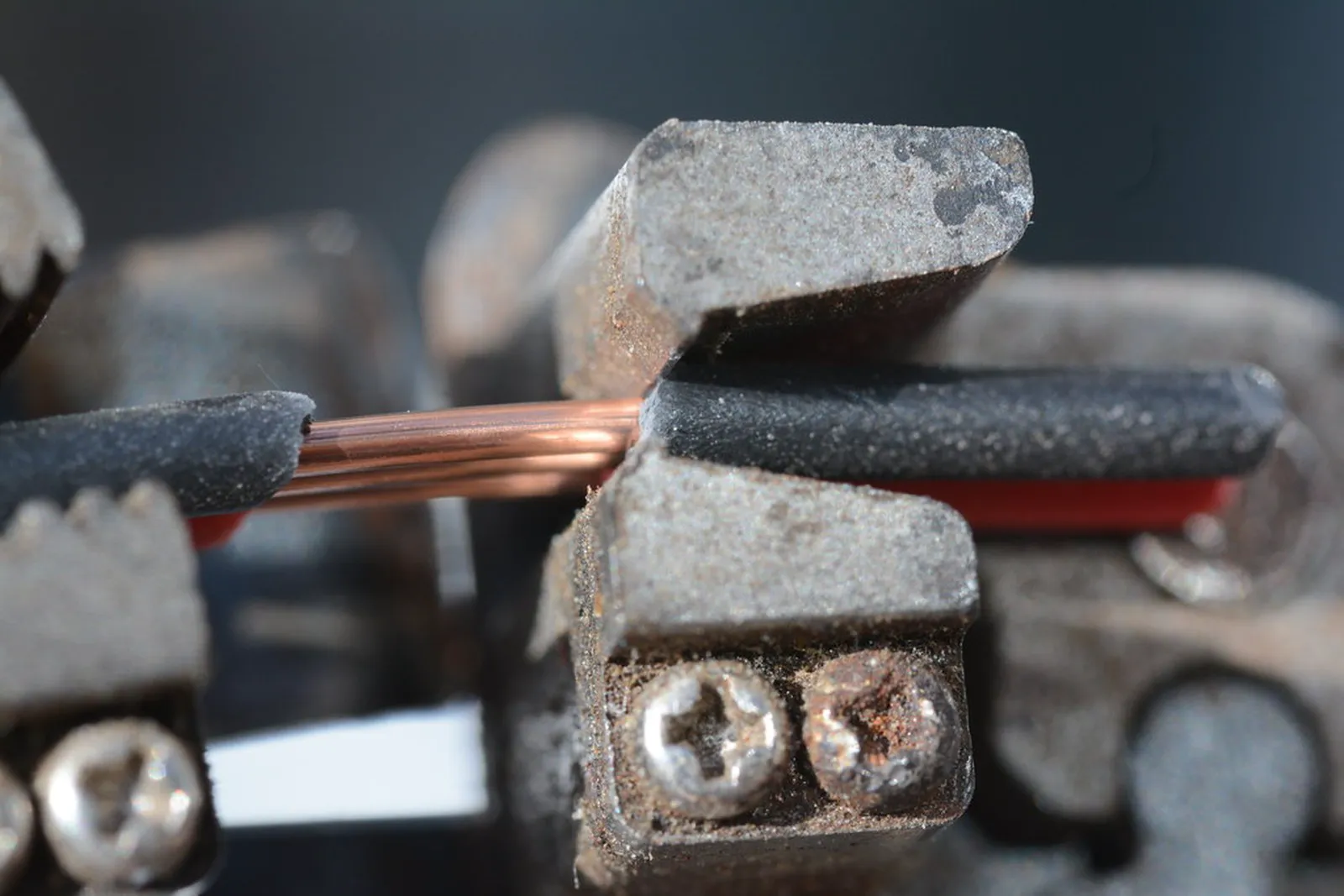
Cover photo: Petar Milošević, Wikimedia Commons, licence CC BY-SA 4.0.